Does Going Draft-Only Actually Pay Off? A Bar Owner's Honest Financial Breakdown
Photo: Ewan-M, CC BY-SA 4.0, via Wikimedia Commons
There's a growing conversation happening in bars across the country: what if we just... got rid of the bottles and cans entirely? Full draft. Every pour from a tap.
For some operators, it sounds like a dream — cleaner back-of-house, faster service, better margins. For others, it sounds like a logistical nightmare. The truth, as usual, is somewhere in the middle. And it depends almost entirely on whether you've actually run the numbers.
Let's do that right now.
The Core Economics of Draft vs. Packaged Beer
The margin advantage of draft beer over bottled or canned product is real and well-documented. A standard commercial half-barrel keg contains roughly 1,984 ounces of beer, which translates to about 165 pints at a 12-oz pour. Compare what you pay per keg versus what you'd pay for the equivalent volume in 12-oz bottles, and draft typically runs 15–40% cheaper per ounce at the wholesale level, depending on brand and region.
On the revenue side, a bar charging $7 per pint across 165 pours generates $1,155 from a single half-barrel. If that keg cost $120 wholesale, the gross margin before overhead is roughly 89%. Bottle-and-can operations rarely touch margins like that, because the per-unit packaging premium at wholesale gets passed along and compressed at the retail price point.
This is the number that makes draft-only concepts so appealing on paper. But paper math and real-world operations are different animals.
The Variables That Can Quietly Eat Your Margins
Pour Waste and Foam Loss
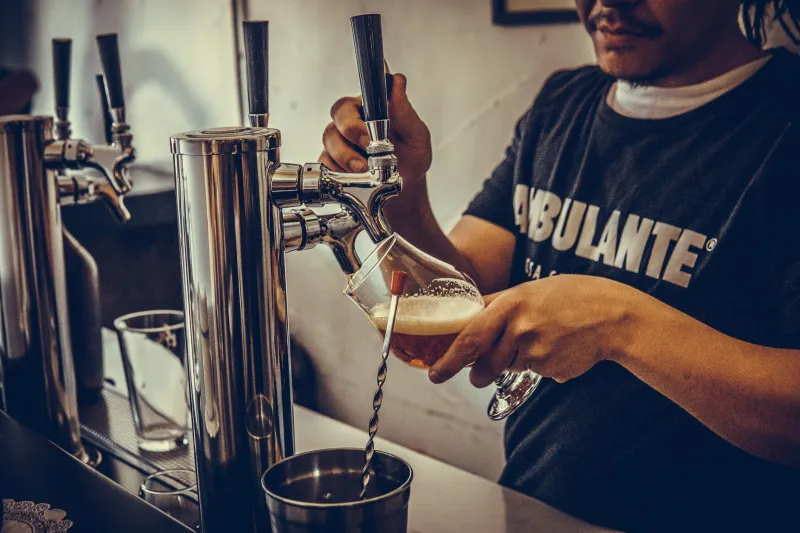
Every draft system loses some beer to foam, line purging, and imperfect pours. Industry estimates typically put waste at 10–20% of total volume for bars without rigorous pour training and equipment maintenance. At the higher end of that range, you're effectively pouring away 33 pints per half-barrel — a $231 loss at $7/pint before you've even covered the keg cost.
Investing in quality flow control equipment, training staff on proper pour technique, and maintaining your lines on schedule can push that waste figure down to 5% or lower. That delta is worth real money at volume.
Equipment Costs and Depreciation
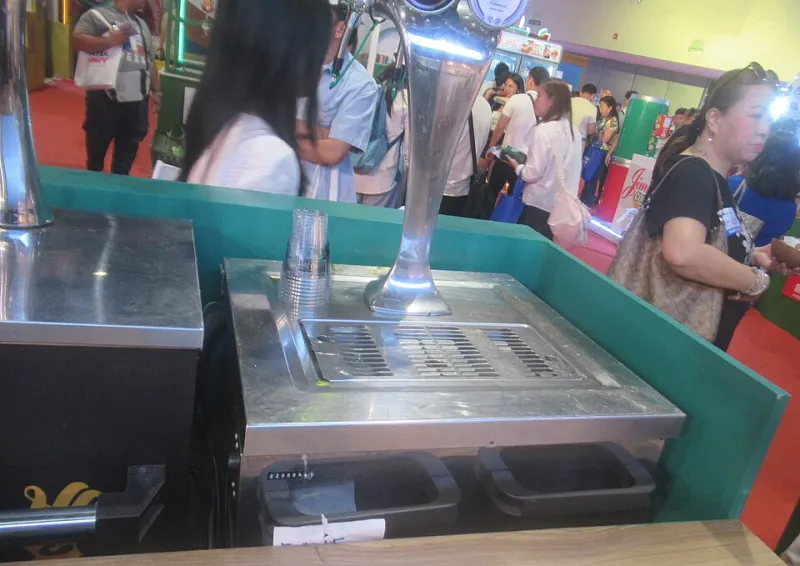
Going draft-only means your equipment investment is non-negotiable. A commercial kegerator or walk-in cooler tap system for a mid-size bar with six to twelve lines can run anywhere from $8,000 to $40,000 installed, depending on configuration and whether you're building new or retrofitting.
Spread over a 10-year equipment lifespan, a $20,000 system costs $2,000 per year in depreciation — roughly $167/month. For a bar doing solid volume, that's a manageable fixed cost. For a lower-volume neighborhood spot, it can be a heavier lift.
Don't forget ongoing maintenance: line cleaning (budget roughly $50–$150/month if you're outsourcing it), coupler replacements, CO2 costs, and the occasional regulator or faucet swap.
Storage and Cooler Space
Here's where draft-only operations often find unexpected savings. Packaged beer inventory — cases stacked in a walk-in or dry storage — takes up substantial real estate. Kegs are volumetrically efficient for the amount of beer they hold, and a well-organized keg cooler can hold considerably more sellable product per square foot than a comparable bottle inventory.
For urban bars where every square foot of storage costs real money, this space efficiency is a genuine financial benefit that rarely shows up in initial ROI calculations.
A Real-World Case Study: The Neighborhood Taproom
Consider a hypothetical mid-size taproom in the Midwest doing about $25,000/month in beer revenue, currently split 60% draft and 40% packaged. Management is considering going 100% draft.
Current state (60/40 split):
- Draft beer COGS: ~28% of draft revenue
- Packaged beer COGS: ~42% of packaged revenue
- Blended COGS: ~34%
Projected full-draft state:
- Draft beer COGS: ~28–30% (slight uptick as volume increases and some premium taps are added)
- Eliminated packaged inventory carrying costs: ~$400/month savings
- Reduced cooler restocking labor: ~$300/month savings
- Additional equipment maintenance: ~$150/month increase
Net projected improvement: ~$550/month, or roughly $6,600 annually before accounting for any revenue lift from a cleaner, more curated tap experience.
That's not a business-transforming number on its own — but it's meaningful, and it compounds with better pour control and premium tap pricing.
When Draft-Only Doesn't Make Sense
Not every venue is a fit for a full draft conversion, and being honest about that matters.
If your customer base has strong preferences for specific packaged products — certain craft cans, imported bottles, hard seltzers in 12-oz form — dropping those entirely can cost you sales that no margin improvement will offset. Know your regulars.
Small-volume operations with limited capital should also be cautious. If you're doing under $8,000/month in beer revenue, the equipment payback timeline stretches out considerably, and the operational complexity may not justify the investment at that scale.
The Bottom Line
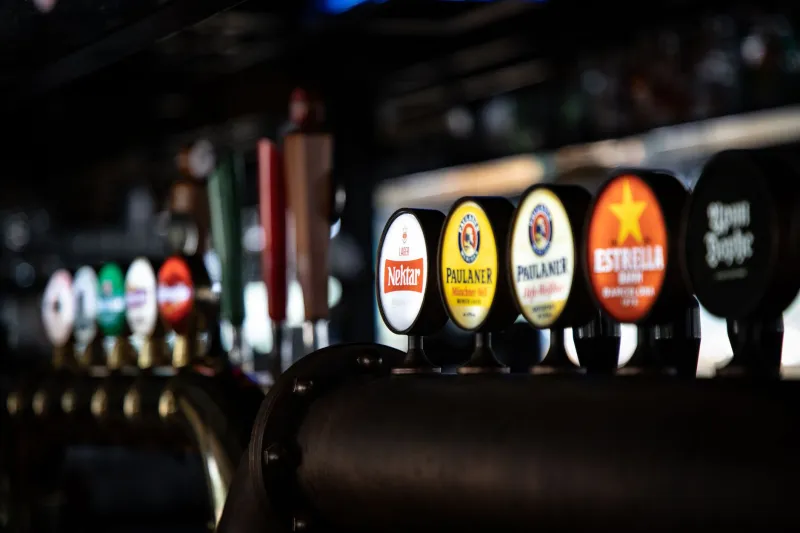
Draft-only operations can absolutely pencil out — but only with rigorous waste control, smart equipment investment, and a customer base aligned with the format. The bars that win with this model aren't just chasing margin; they're building an identity around the draft experience, curating tap lists with intention, and training staff to pour with precision.
If you go in with clear eyes and a real spreadsheet, the numbers are often there. If you go in chasing the dream without the math, the foam losses will find you fast.