Same Beer, Totally Different Taste: The Real Reasons Your Home Pours Fall Short of the Bar
You've done everything right, or so you thought. You sourced a half-barrel of your favorite craft lager, hooked it up to your kegerator, and pulled what should have been a perfect pint. But something's off. It's flatter than expected, a little warmer-tasting, maybe even a touch foamy. Meanwhile, the bar three blocks away serves the exact same beer and it's practically a religious experience every time.
What gives?
This isn't a conspiracy — though we'll admit "keg tap conspiracy" has a nice ring to it. It's actually a surprisingly complex interplay of physics, chemistry, biology, and yes, even a little bit of psychology. The good news? Every single factor is within your control once you know what to look for.
The Pressure Problem Most Home Tappers Get Wrong
Let's start with the biggest culprit: CO2 pressure. Most home kegerator owners set their regulator once and forget about it, usually somewhere between 10 and 12 PSI because that's what the internet told them to do. The problem is that the "right" pressure isn't a universal number — it's a calculation.
Pressure is determined by three things: the temperature of your keg, the length and diameter of your beer line, and the carbonation level the brewery built into that specific beer. A hefeweizen and an American lager are carbonated to completely different volumes of CO2. If you're running both through the same setup at the same pressure, one of them is going to taste wrong.
Bars that serve multiple draft lines invest in separate regulators or secondary regulators for each tap, dialing in the exact serving pressure for each style. At home, you might only have one regulator — which means you need to choose your pressure based on the beer you're currently serving, not just a ballpark figure.
A good starting point: use a CO2 pressure chart that cross-references your keg temperature with your beer's target carbonation level (usually listed by the brewery or on sites like BrewUnited's carbonation calculator). Then adjust in small increments and give the keg 24 hours to stabilize before judging.
Your Beer Lines Are Longer Than You Think They Need to Be — And That's a Good Thing
Here's something counterintuitive: longer beer lines actually help you pour better. Professional bar setups often run lines of 8 to 12 feet or more, specifically because line length creates resistance that slows the flow of beer and prevents it from foaming as it travels from keg to faucet.
Many home kegerators, especially the converted refrigerator kind, come with lines that are only 3 to 5 feet long. That short run means beer hits the faucet fast and turbulent, which releases CO2 prematurely and gives you a foamy, under-carbonated pour.
The fix is simple and cheap: extend your beer line. A 3/16-inch inner diameter vinyl line at around 8 to 10 feet is a solid starting place for most home setups. If you're still getting foam, go longer. If pours are sluggish, dial up the pressure slightly or trim a foot off the line. It's a balancing act, but once you nail it, your pours will be noticeably smoother.
Temperature: The Variable That Touches Everything
Bar-quality draft beer is typically served between 36°F and 38°F. Not 42°F. Not whatever temperature your kegerator holds because you've never checked it with an actual thermometer. Thirty-six to thirty-eight degrees Fahrenheit.
Why does this matter so much? Because CO2 solubility in liquid is directly tied to temperature. Warmer beer holds carbonation less effectively, which means gas escapes more readily during the pour and you end up with a flat, lifeless pint. Even a few degrees of difference is perceptible to most drinkers.
Get a cheap fridge thermometer and put it inside your kegerator right next to the keg. If it's reading above 40°F, adjust your temperature dial and give it a full day to stabilize before testing again. This one step alone will improve your pours dramatically.
Also worth noting: the faucet and shank that stick out of your kegerator are exposed to room temperature air. In a commercial bar, these components are kept cold through a process called glycol chilling or by keeping the entire tap tower cold. At home, you can wrap your tap tower in insulation or pick up a tower cooler fan — a small investment that makes a real difference in your first pour of the day.
Glassware: The Part Everyone Skips
Ask any bartender at a serious craft beer bar what they do before pouring a draft and they'll tell you: they rinse the glass. Not just any rinse — a cold water rinse right before the pour. This does two things. It removes any residual soap film (which destroys head retention) and it lowers the glass temperature so the beer doesn't instantly warm up on contact.
At home, most people grab a glass from the cabinet at room temperature. The beer hits warm glass, CO2 releases rapidly, and your carefully pressurized pint turns into a glass of foam with some beer underneath it.
Solution: keep a few pint glasses in the fridge or freezer, or at minimum rinse them under cold water for 10 seconds before pouring. If you really want to go bar-level, invest in a glass rinser attachment for your kegerator or bar sink. They run about $20 to $40 and they genuinely work.
Also, ditch the frosted mugs. Frozen glassware causes excessive foaming and actually numbs your palate to the beer's flavor. Cold is good. Frozen is not.
The Pour Itself: Angle, Speed, and Technique
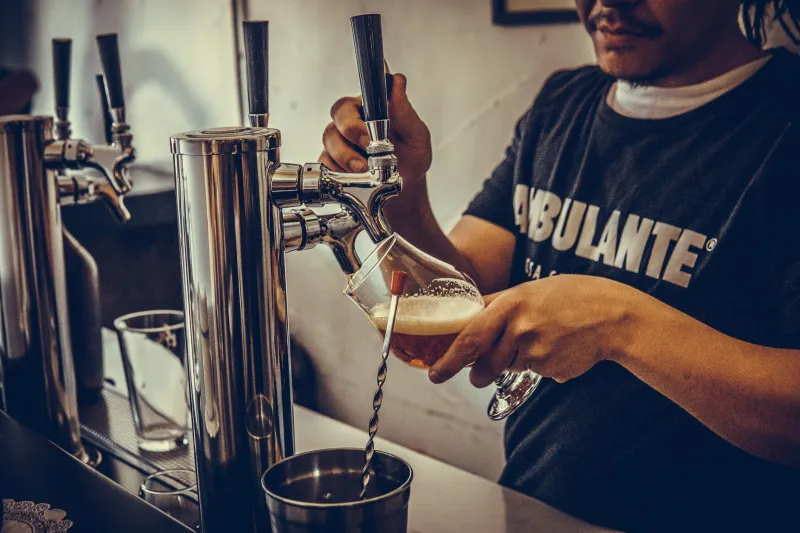
Bartenders who pour draft beer well make it look effortless because they've done it hundreds of times. The technique is actually pretty specific: tilt the glass at about 45 degrees, open the faucet fully (don't crack it halfway — partial flow causes turbulence and foam), and gradually straighten the glass as it fills. Finish with a deliberate head of about an inch.
At home, people tend to pour slowly and carefully, which paradoxically creates more foam because the beer is agitated longer during its descent into the glass. Open the tap all the way, pour with confidence, and you'll get a cleaner result.
The Psychology of the Pour (Yes, Really)
Here's the part that might sting a little: some of what makes bar beer taste better is purely in your head. Research in sensory psychology consistently shows that environment, presentation, and expectation influence how we perceive flavor. The ambiance of a bar — the lighting, the social energy, the fact that someone else is doing the work — primes your brain to enjoy the experience more.
This doesn't mean your home setup is doomed. It means you can lean into the ritual. Use proper glassware. Serve at the right temperature. Pour with intention. Even something as simple as setting up your bar area nicely and offering beer to guests with a little ceremony can shift perception meaningfully.
Putting It All Together
If your home pours haven't been matching bar quality, you're probably dealing with a combination of slightly warm temperatures, mismatched pressure, short beer lines, and room-temperature glassware. Fix those four things and you'll close 90% of the gap between your kegerator and your favorite tap room.
The remaining 10%? That's atmosphere — and that's actually the fun part to build.