One Keg or Ten? How to Right-Size Your Draft Setup for Any Event on the Calendar
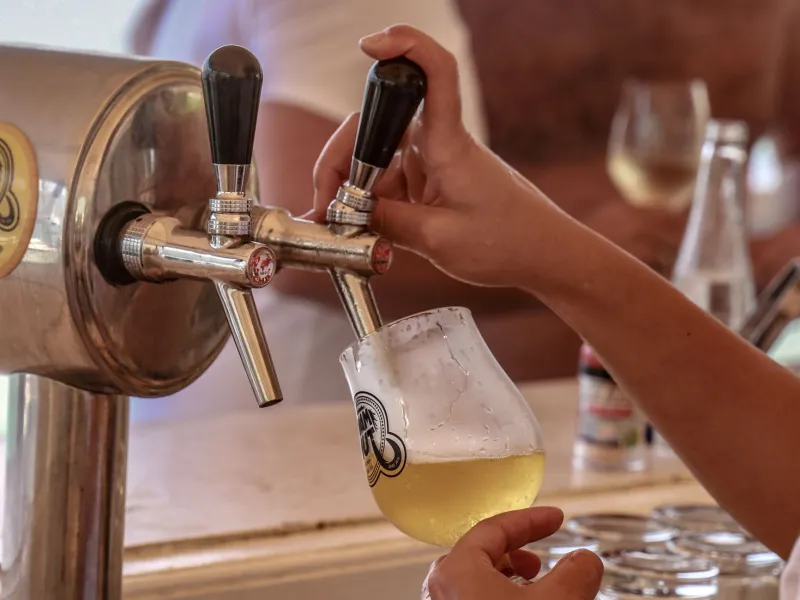
There's a certain magic to cracking open a perfectly poured draft beer at a party. The foam settles, the glass frosts up, and suddenly the whole vibe shifts. But that magic doesn't just happen — someone did the math, hauled the equipment, and figured out how to keep 15 (or 150) people in cold beer for four hours straight.
That someone could be you. And with the right planning, it doesn't have to be stressful.
Whether you're firing up the grill for a dozen neighbors or coordinating a full-scale wedding reception, scaling your keg setup comes down to a few core variables: how many people are coming, how long the event runs, what they're drinking, and what gear you've got to work with. Let's break it down.
Start With the Numbers: Calculating How Much Beer You Actually Need
The golden rule of keg math is simple: plan for roughly one pint every 45 minutes per beer-drinking guest. That's a comfortable pace for most social events — not a dry party, not a sloppy one.
Here's a quick reference to keep in mind:
- A half-barrel keg (the standard 15.5-gallon size) holds about 165 twelve-ounce servings or roughly 124 pints.
- A quarter-barrel (7.75 gallons) gets you around 82 twelve-ounce pours.
- A slim quarter, same volume as a quarter-barrel but a taller, narrower profile, fits better in tight spaces and single-tap kegerators.
- A sixth-barrel (5.16 gallons) gives you about 55 servings — great for variety when you want to offer multiple styles.
For a casual backyard BBQ with 20 guests over three hours, a single quarter-barrel is probably your sweet spot. Add a sixth-barrel of something different — a lager alongside an IPA, say — and you've got a solid two-tap spread without over-buying.
Scale up to a rehearsal dinner with 60 guests for four hours? You're looking at two to three half-barrels, depending on how enthusiastic your crowd is. A full wedding reception with 150–200 guests over five to six hours? Budget for five to eight half-barrels, especially if beer is the primary alcohol service.
Pro tip: Always round up by at least one keg for large events. Running out mid-reception is a memory that lasts longer than the wedding photos.
Small Gatherings: Keep It Simple and Cold
For events under 30 people, you don't need a complicated rig. A single kegerator or a basic jockey box setup with a CO2 tank and one tap handles the job cleanly. The priority at this scale is temperature — beer should stay between 34°F and 38°F for optimal pour quality and foam control.
If you don't own a kegerator, a foam-insulated keg tub packed with ice is a reliable option. Fill it with ice before the keg goes in, and plan to refresh the ice every two to three hours on a warm day. In direct summer sun, you'll want to top it off more frequently.
At this size, a single CO2 regulator and standard tap handle are all you need. Keep a spare CO2 cartridge on hand just in case — it's a small investment that saves a big headache.
Mid-Size Events: The 30–100 Guest Range
This is where planning starts to matter more. At 50 guests, you're likely running multiple kegs and possibly multiple taps, which means you need to think about your gas supply, your tap configuration, and your cooling capacity.
A dual-tap jockey box is a popular choice here. It keeps kegs in coolers packed with ice while running beer through coiled stainless lines that chill it right before it hits the glass. These are portable, relatively easy to set up, and can handle a solid pour rate when the line at the tap gets busy.
For CO2, a 5-pound tank is fine for a single keg, but if you're running two or three kegs simultaneously, step up to a 10- or 20-pound tank. Running low on gas mid-event is just as bad as running low on beer.
Also consider your serving setup. At 50+ people, a single tap creates a bottleneck. Two taps running different beers keeps the line moving and gives guests options — which they will absolutely appreciate.
Large-Scale Events: Weddings, Corporate Parties, and Beyond
Once you're north of 100 guests, you're in event-production territory, and your keg setup should reflect that. This is where a multi-tap draft tower, a dedicated glycol cooling system, or a professionally arranged keg wall becomes worth considering.
Glycol systems circulate chilled fluid through the beer lines, keeping everything at serving temperature regardless of how far the keg is from the tap. This is the same technology used in bars and restaurants, and it's a game-changer for large outdoor events where you can't park a kegerator right next to the serving station.
For a 200-person wedding, here's a realistic equipment checklist:
- 6–8 half-barrel kegs (mix of styles based on your guest preferences)
- 4-tap draft tower or dual jockey box setup
- 20–50 lb CO2 tank with dual-gauge regulator
- Glycol chiller or large insulated keg tubs with dedicated ice supply
- Drip trays, tap handles, and a dedicated serving table
- Plastic or compostable pint cups in bulk
Assign at least one person to manage the tap station throughout the event. At this scale, you want someone keeping an eye on CO2 pressure, swapping kegs when they kick, and making sure lines stay clean and flowing properly.
Don't Overlook the Non-Beer Drinkers
Even at a beer-forward event, not everyone drinks. A good rule of thumb is to assume 20–30% of your guest list will prefer something else. Supplement your keg setup with canned seltzers, soft drinks, or even a keg of cold brew or craft soda — yes, those work great on tap too — and you'll make sure no one feels like an afterthought.
Timing Your Keg Order
Most distributors and homebrew shops need at least a week's notice for keg orders, and popular styles can sell out around holidays. For large events, order two to three weeks out. Confirm your pickup or delivery date a few days before the event, and always verify the keg return policy if you're renting — deposits vary widely.
The Bottom Line
A great draft setup isn't about having the fanciest equipment. It's about matching your gear and your quantities to the actual event in front of you. A backyard BBQ and a wedding reception both deserve cold, well-poured beer — the approach just looks a little different.
Do the math, plan your cooling, have a backup CO2 tank, and order one more keg than you think you need. Do all of that, and you'll be the host everyone talks about long after the party ends.