Keg in a Box: The No-Surprises Guide to Ordering Draft Beer Online in the US
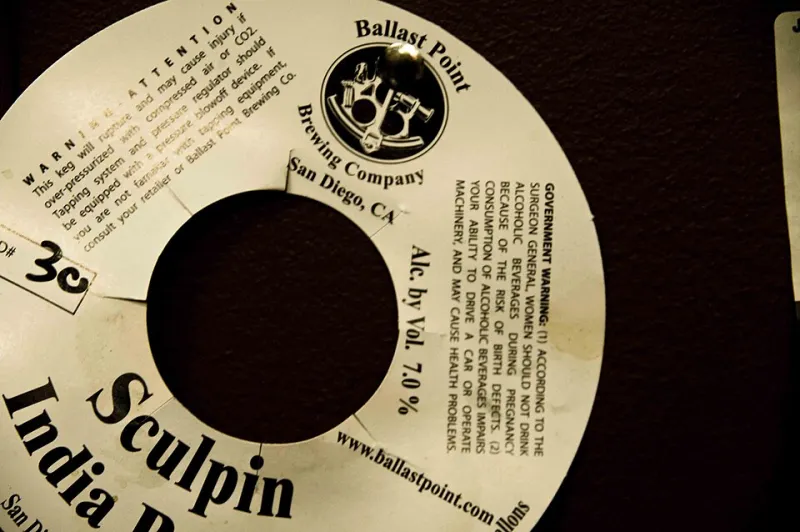
Photo: TheDigitel Beaufort from Beaufort, SC, USA, CC BY 2.0, via Wikimedia Commons
Buying a keg online feels like it should be as easy as ordering a case of anything else. It isn't — and the reasons are mostly invisible until something goes wrong. Alcohol shipping is governed by a patchwork of state rules, kegs are heavy freight that requires an adult signature, and deposits and returns come with their own fine print.
Here's the checklist we'd want if we were ordering a keg for a bar, a restaurant, or a backyard party, and we only had one shot to get it right.
Rule One: Alcohol Shipping Is State Law, Not Store Policy
This is the surprise that sinks the most orders. Direct-to-consumer shipping of beer and malt beverages is restricted or outright prohibited in a large number of states, and the rules differ for retailers, wineries, breweries, and third-party marketplaces. A store that ships a keg to one ZIP code may be legally unable to ship the same keg one state over.
Practically, that means:
- Enter your delivery ZIP before you fall in love with a product page. Reputable shops gate availability at checkout for a reason.
- Expect some states to be pickup or local delivery only. That's not a workaround to argue with support about; it's the law.
- Plan for adult signature on delivery. Someone 21 or older has to be there, in person, with ID. No P.O. boxes, no 'leave it on the porch.'
If the checkout says no, your options are a licensed local retailer, a brewery that sells direct, or a friend making a drive. None of those are failures — they're just the map.
Rule Two: Read the Delivery Window Like a Contract
'Ships in 2–3 business days' is not the same as 'arrives in 2–3 business days.' Freight kegs move on a carrier schedule that includes pickup lag, transit time, and a delivery appointment window you may need to schedule yourself.
A workable rule of thumb: aim for the keg to land three to five days before you need it. That buffer absorbs a missed appointment, a weather delay, or a rescheduled liftgate. Ordering for Thursday delivery before a Saturday event is how you end up with a keg sitting at a depot 40 miles away while guests arrive.
Also confirm:
- Whether the shipment is curbside or inside delivery, and whether a liftgate is included. A full half barrel weighs north of 160 pounds; a sixtel around 60.
- Whether you need a loading dock or can receive a pallet on a residential street.
- Who to call if the tracking stalls — the retailer or the carrier.
Rule Three: Inspect Packaging, Seals, and Freshness on Arrival
A keg that survived shipping is not automatically a keg you should tap. Before you sign:
- Look for dents at the chime and the valve. A bent spear or damaged valve stem means the keg won't seal or pour properly.
- Check for leaks. Any sticky residue, hissing, or pooling around the valve is a refusal, not a 'we'll see how it goes.'
- Find the date code. Breweries stamp production or best-by info on the keg collar or label. Pale ales and IPAs are best young; stouts and darker styles hold longer. Match the date to the style before you plan the menu around it.
- Photograph everything. Damaged-in-transit claims almost always require photos taken within 24–48 hours of delivery. Shoot the box, the keg, the label, and the valve before the driver pulls away.
Rule Four: Understand the Deposit and Return Before You Buy
The keg itself is usually a deposit item, and the deposit is often a meaningful chunk of the order. Know these answers up front:
The deposit amount, per keg size. Who pays return freight on empties. How long the return window stays open — 30 days is common, shorter is not unusual. Whether there's a restocking fee on unopened kegs. Whether returns are accepted at all once the keg is tapped (they generally aren't, since the product is gone).
A cheap keg with an inconvenient return process is not a cheap keg. Factor the round trip into your total cost.
Rule Five: Know When Local Pickup Still Wins
Online ordering is genuinely convenient for planned events, specialty beers, and keg sizes your local store doesn't stock. But local pickup or a nearby retailer beats delivery more often than people expect:
- The event is this week. Freight lead times won't save you.
- You need to confirm the coupler type in person. Sankey D versus A, S, G, or U — a two-minute visual check prevents a very long night.
- You want to eyeball the keg's condition before money changes hands.
- Deposit logistics are easier in person. Handing the empty back across a counter beats boxing it up.
- Freight cost outweighs the convenience for a single keg moving a short distance.
The Pre-Checkout Checklist
Before you click buy: ZIP eligibility confirmed, delivery date math done with a three-to-five-day buffer, coupler type matched to your system, keg size matched to your headcount, deposit and return terms read, damage-claim window noted, and a phone number saved for delivery day.
Run that list once and online keg buying stops being a gamble. It becomes what it should be — a predictable, boring transaction that leaves you free to worry about the things that actually make the party.