Your Keg Isn't Coming: A Backup Playbook for Late, Wrong, and Missing Draft Deliveries
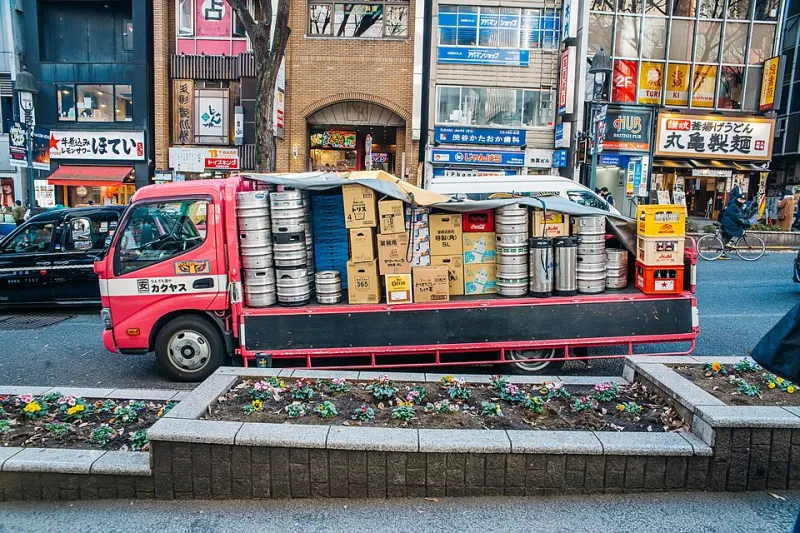
Photo: Dick Thomas Johnson from Tokyo, Japan, CC BY 2.0, via Wikimedia Commons
There is a particular kind of quiet panic that sets in around 4 p.m. on a Friday when your phone lights up with a message from the distributor: the truck is running two days behind. Or the pallet arrived, but it's the wrong beer. Or worse — nothing shows up at all, and the tracking page has been stuck on 'label created' since Tuesday.
Draft beer is a perishable, heavy, regulated product moved by humans in trucks. Things go sideways. The venues that handle it gracefully aren't luckier than everyone else — they just built a plan before they needed one.
Build the Backup Before You'll Ever Need It
The best time to solve a missing keg is three weeks before the event. A few habits do most of the work:
- Keep one crowd-pleaser in reserve. A half barrel of a reliable, middle-of-the-road lager or pale ale sitting cold in the walk-in is the single cheapest insurance policy in the building. Rotate it, sell it, replace it.
- Order to a buffer, not to a forecast. For ticketed events, plan for roughly 15–20% more volume than your headcount math suggests, then confirm the delivery date lands at least three business days before you need to tap.
- Learn your distributor's cut-off time. Most will tell you exactly when orders stop being same-week. Write it on the office wall.
- Keep a second number. One regional distributor, one local brewery that sells kegs direct, one liquor store with an actual keg room. Three contacts turn a crisis into a phone call.
The Fifteen-Minute Unboxing Audit
When a keg does land, the clock on your problem starts ticking quietly. Do this before it goes in the cooler:
- Count it. A standard half barrel holds 15.5 gallons — that's roughly 124 sixteen-ounce pours or about 165 twelve-ounce pours. A sixtel (sixth barrel) is 5.16 gallons, about 55 twelve-ounce pours. If the count is short, you want to know now, not at 9 p.m.
- Check the coupler type. American Sankey D is the default for domestic kegs, but imports use A, S, G, and U systems, and some craft kegs arrive on oddball valves. If your taps don't match, that keg is a decorative object.
- Read the date code. Breweries stamp production or best-by dates on the keg collar or label. A keg with six weeks on it is a different product than one with six days.
- Inspect the valve and chime. Dented spears, bent valve stems, and leaking gaskets are grounds for refusal. Photograph it before you sign anything.
- Confirm the deposit paperwork. If you're being charged a deposit, know what it is and how returns work before the driver leaves.
When the Delivery Is Just Wrong
Wrong SKU, wrong size, wrong coupler — resist the urge to tap it and hope. Call the distributor immediately, describe what arrived, and photograph the label alongside the valve. Most reputable suppliers will swap it, but only if the keg is untapped. Once you've poured, it's yours.
If the swap can't happen in time, that's when the backup keg earns its keep. Do the math on what you'll run out of first and adjust the tap list rather than pretending a keg of something else is the thing people ordered.
Sourcing an Emergency Keg Without a Meltdown
If nothing is coming, work the phones in this order:
- Local breweries first. Taprooms frequently sell kegs direct, sometimes same-day, often with less bureaucracy than a big distributor. Ask what's cold and ready.
- Specialty liquor stores with keg rooms. They carry inventory for exactly this reason, and they can often tell you coupler type over the phone.
- Your distributor's emergency desk. Ask specifically about transfers from another account or a partial from the warehouse — not just a new order.
Bring ID, a form of payment that clears instantly, and a vehicle that can actually hold a keg upright. Ask whether it's cold or warm. A warm keg needs a day to settle and chill before it pours anything resembling beer, so plan around that.
Selling the Substitution Without a Revolt
Guests forgive a change. They do not forgive being misled. If you're pouring something different, say so — put a small card at the tap, tell the bartender to mention it, and let people taste before they commit. A free two-ounce sample converts skeptics faster than any sign. Keep pricing consistent or nudge it down slightly; nobody minds a substitution that saves them a dollar.
The Twenty-Minute Post-Mortem
The night after a delivery failure, write down what broke, who you called, how long it took to fix, and what it cost. Update your contact list. Adjust your buffer. Then set a reminder to order earlier next time. The backup plan you build after a bad night is the one that saves the next one.
Delivery problems are a when, not an if. Treat the backup keg as part of your standard setup, not a luxury — and a late truck becomes an inconvenience instead of a disaster.